
How to Choose Wheel Alignment in Ohio (2026)

Wheel alignment adjusts your vehicle’s suspension angles so the tires meet the road evenly and the vehicle tracks straight. In Ohio, alignment service can correct pulling, an off-center steering wheel, uneven tire wear, or handling changes after pothole impacts. It helps protect tires, improve control, and support safer driving.
What does wheel alignment service include?
A wheel alignment is a measurement and adjustment service, not a tire balance. A technician checks the angles that control how each wheel sits and moves in relation to the vehicle and road.
The three primary alignment angles are:
- Camber: Whether the top of the tire leans inward or outward.
- Caster: The steering-axis angle that supports stability and steering return.
- Toe: Whether the fronts of the tires point inward or outward.
During service, the technician may inspect steering and suspension parts before making adjustments. If a worn tie rod, ball joint, control arm, or other component is causing the problem, alignment alone may not provide a lasting repair.
Wheel alignment is different from Hunter Roadforce Balance . Balancing corrects weight differences that can cause vibration, while alignment corrects wheel angles and vehicle tracking.
What are the signs you need a wheel alignment?
Many alignment problems develop gradually. You may notice one or more of these warning signs:
- The vehicle pulls or drifts left or right on a reasonably level road.
- The steering wheel is off-center while driving straight.
- The tires show uneven, rapid, or scalloped wear.
- The vehicle feels unstable, wanders, or requires frequent steering correction.
- The steering wheel shakes after an impact or suspension repair.
A slight road crown can make a vehicle feel as though it is drifting. However, persistent pulling, new tire wear, or a changed steering position deserves an inspection. Do not ignore a vehicle that suddenly handles differently.
When should you get a wheel alignment in Ohio?
Have the alignment checked when you notice a handling change or after an event that could move a wheel or suspension component. Common situations include:
- After hitting a pothole or curb. Ohio roads can expose vehicles to impacts that bend or shift components.
- After installing new tires. An alignment check helps protect the investment in fresh tread.
- After suspension or steering work. Many repairs require alignment measurements afterward.
- When replacing worn tires. Uneven wear may indicate an underlying angle problem.
- When the steering wheel position changes. This is one of the clearest driver-visible clues.
There is no universal mileage interval that fits every vehicle. Driving habits, road conditions, tire type, suspension condition, and previous impacts all matter. Ask a technician to recommend an inspection schedule based on your vehicle and use.
Wheel alignment problems and Ohio driving conditions
Potholes, rough pavement, construction zones, railroad crossings, and seasonal temperature changes can challenge tires and suspension components. A single impact does not always create an obvious symptom. Small changes can become visible later as irregular tread wear or a vehicle that no longer tracks correctly.
Regular tire inspections are especially useful if you commute across Northeast Ohio or drive frequently between cities such as Canton, Akron, Massillon, Dover, and Zanesville. Ziegler Tire serves customers throughout Ohio, Kentucky, Pennsylvania, and Indiana, with 25 locations and local teams familiar with everyday regional driving conditions.
For broader maintenance guidance, review these car care tips and tire care tips . They can help you spot problems between service visits.
How much does wheel alignment cost?
Wheel alignment pricing varies by vehicle, location, alignment type, and whether replacement parts are needed. A standard two-wheel or four-wheel alignment may have different requirements, and some vehicles need additional adjustments or calibration.
The most useful way to evaluate price is to ask what the quoted service includes:
- Initial measurements and a before-and-after report
- Adjustment of the angles the vehicle permits
- Inspection for worn or damaged steering and suspension parts
- An explanation of any recommended repairs
- A road test or final verification when appropriate
If a technician finds a damaged component, repairing that issue may be necessary before the alignment can hold. The lowest initial price is not always the lowest overall cost if an underlying problem remains.
For a current estimate, contact a nearby auto repair location or schedule an appointment . A team member can discuss your vehicle, symptoms, and service needs before work begins.
Can new tires fix an alignment problem?
New tires do not correct incorrect wheel angles. They can temporarily make the vehicle feel better because fresh tread improves grip, but an alignment problem can quickly damage the new tires through inner-edge, outer-edge, or irregular wear.
If you are buying tires, pair the purchase with an alignment inspection when:
- The old tires wore unevenly.
- The steering wheel was not centered.
- The car pulled to one side.
- You recently hit a pothole or curb.
- Suspension or steering repairs were completed.
Explore tire services , shop for tires , or shop for wheels to compare related options. Correct fitment, inflation, balance, and alignment all contribute to tire life and handling.
What happens during a wheel alignment appointment?
A typical appointment follows a straightforward process:
- Symptom review: You explain pulling, vibration, tire wear, or recent impacts.
- Visual inspection: The technician checks tires, steering, suspension, and ride height.
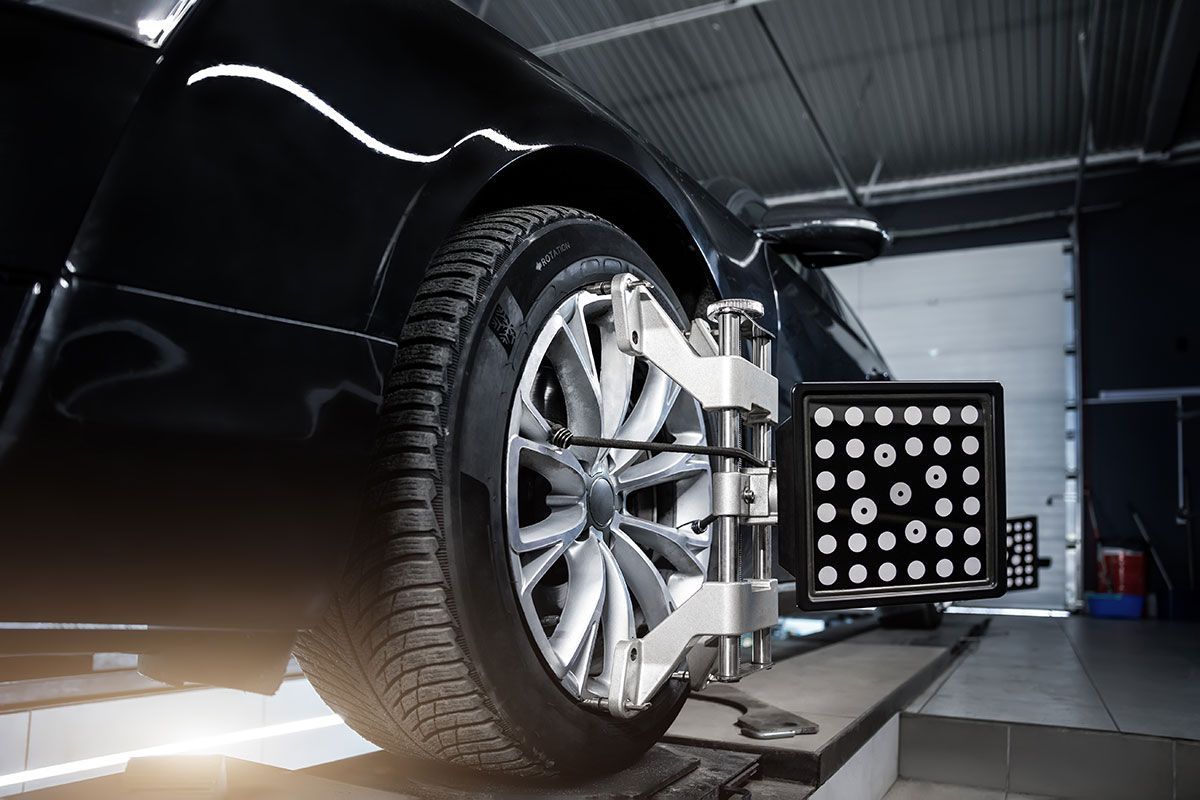
- Measurement: Alignment equipment records the vehicle’s current angles.
- Adjustment: The technician adjusts available settings to the manufacturer’s specifications.
- Verification: Final measurements confirm the result and identify any remaining concerns.
Vehicle design affects the exact process. Some models allow adjustment at one axle, while others allow more comprehensive adjustment. If parts are bent or worn, the technician should explain what must happen next rather than masking the problem with an adjustment.
How can you prevent uneven tire wear?
Alignment is one part of a broader tire-care routine. To reduce avoidable wear:
- Check tire pressure regularly and use the vehicle manufacturer’s recommended setting.
- Inspect tread for edge wear, cupping, cracks, or embedded objects.
- Rotate tires according to the vehicle and tire manufacturer’s guidance.
- Slow down for potholes, road debris, and sharp pavement transitions when possible.
- Request an inspection when steering, braking, or handling changes.
Keep service records and note when tires were installed or rotated. A pattern of wear can help a technician identify whether the cause is alignment, inflation, balance, suspension, or driving conditions.
Is wheel alignment different for trucks and SUVs?
The basic purpose is the same, but trucks and SUVs can have different suspension designs, ride heights, tire sizes, and adjustment requirements. Added loads, towing, off-road use, and modified suspension can also affect how a vehicle handles and wears tires.
Tell the technician how you use the vehicle. A work truck, family SUV, commuter car, and performance vehicle may need different inspection considerations. If you use vehicles for business, fleet services can help organize maintenance across multiple vehicles.
Choose a trusted Ohio wheel alignment service
Wheel alignment is a practical way to address pulling, off-center steering, irregular tire wear, and handling changes before they become more expensive problems. It is especially worth checking after pothole impacts, new tires, or steering and suspension repairs.
Start by noting your vehicle’s symptoms and recent road events. Then request an inspection that includes measurements, a review of related components, and a clear explanation of any recommended work. Ziegler Tire’s Ohio locations can help you evaluate alignment, tires, wheels, and connected auto repair needs.
Find a convenient retail location , view reviews , or make an appointment for wheel alignment service. Acting when you first notice a change can help preserve your tires, improve handling, and give you greater confidence on Ohio roads.
Comprehensive Coverage for All Your Automotive Repair Needs Awaits You!


